
Where Does Your Support Go? What the 3q29 Foundation Actually Does
With our annual fundraiser Gather Under the Stars behind us, it felt like the right moment to connect the dots between your support and what it actually does.
Sometimes supporting a rare disease organization like ours can feel a little abstract. What exactly do we do? Where does your support go? Does it even make a difference?
The short answer is yes. Whether your support comes in the form of a monetary donation, an in-kind donation, or your time, every bit helps.
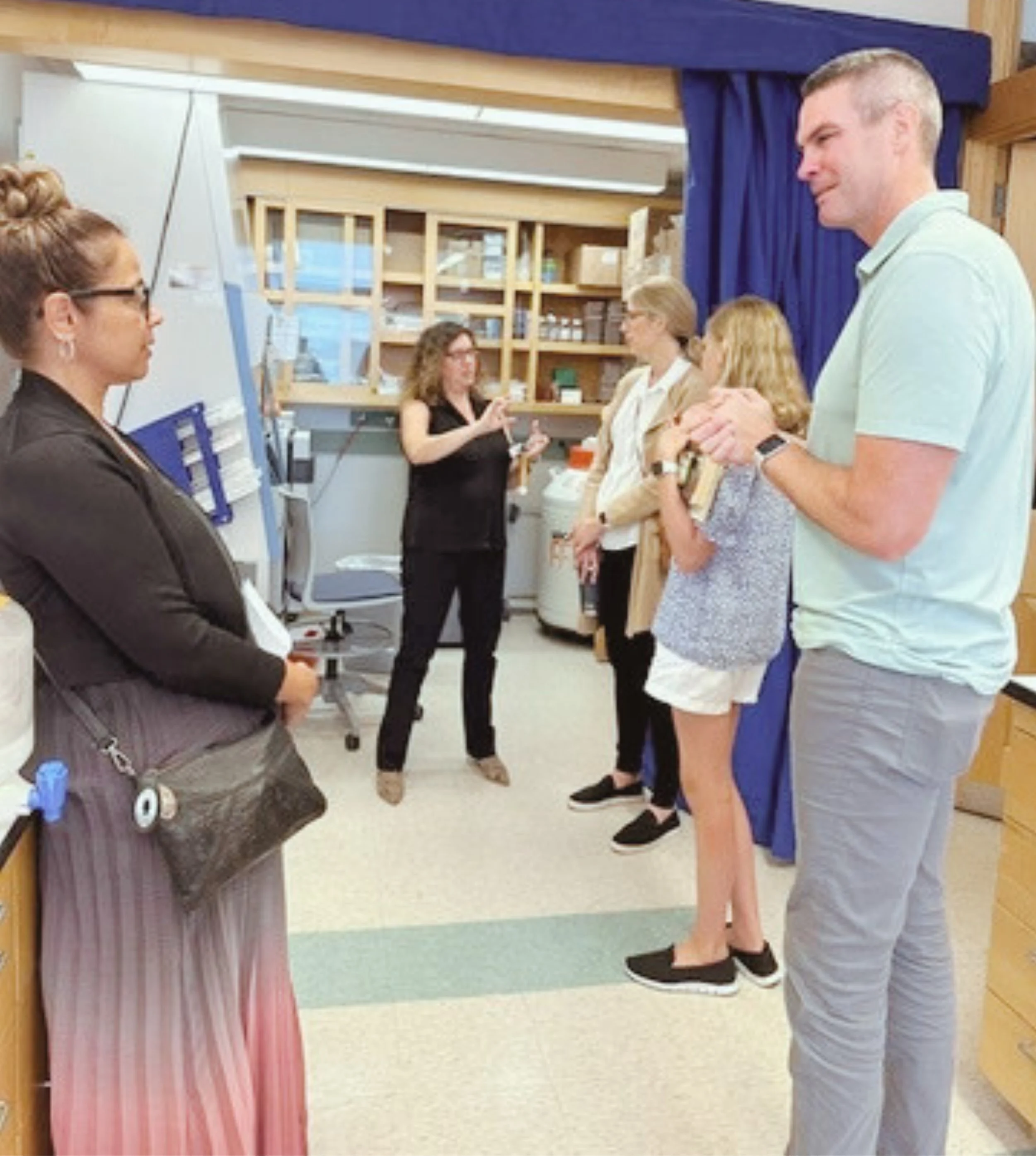
Our official mission is to “create paths to treatment for people with a chromosome 3q29 syndrome by supporting reasearch, increasing access to information and resources, and building a strong community.”
But what does that look like in real life? Let's break down this wordy statement into something we can all understand. Then we'll share how we're making that happen thanks to your help.
Increasing Access to Information and Resources
If you received a diagnosis a decade ago, whether for yourself or someone close to you, you know how hard it was to find useful information. To illustrate how far we've come, here's a tale of two moms (and yes, these are true stories):
Fifteen years ago, a mom in the United States received a diagnosis of 3q29 deletion syndrome for her child. Not one professional she spoke to, not even the geneticist, had heard of this condition and certainly no one had any good advice. Google existed, but the information she found was more confusing, and left her feeling anxious, alone, and helpless.
Fast forward to 2026. A mom in Australia received her child's diagnosis through her healthcare portal on a Saturday night. With no one to call to ask what it meant, she did what we all do — she opened her laptop and searched "3q29 deletion syndrome."
Within minutes, she had information she could actually use, a community of people who'd been exactly where she was standing, and a direct line to Dr. Mulle—the researcher whose work sits at the center of what we know about this condition—if and when she was ready. Does this mom still have complicated feelings and anxiety? Maybe or maybe not, but either way, the family has more power over its journey.
. . .
If you've had to cobble together questionable information in the past, you recognize how valuable this can be for newly diagnosed families and the clinicians working with them.
Beyond just sharing what we know, we advocate for patients and families by collaborating with other rare disease organizations. As we become more established, we're increasingly invited to participate in efforts that will help those even beyond the 3q29 community.
For example, we've signed on to petitions that ask lawmakers to maintain or increase resources in the areas of education, housing, and research. A stronger voice for our community means a stronger voice for the broader rare disease community too.
Creating Paths to Treatment
There's currently no "cure" for 3q29 deletion or duplication syndromes. Researchers are working to collect data that provides a clearer picture of the various ways 3q29 affects individuals, and understand why experiences vary so widely. Once this is better understood, the goal is to develop effective therapies.
And let's be clear—we know not everyone with 3q29 is interested in a "cure" or a "fix" even if one becomes available. But the focus is also on offering solutions to benefit the well-being of those with 3q29.
Researchers ask questions like:
"How can we address GI distress in kids early so they grow up loving food rather than avoiding it?"
"Which medications work best to alleviate anxiety?"
"What are the factors that contribute to mental illness, and what therapies will be most helpful?"
The 3q29 Foundation assists in the search for answers in a few ways—promoting the 3q29 Registry, facilitating bidirectional communication, and seeking grants for patient-centered resources and to fulfill our mission. We’ll explain…
The 3q29 Registry
First, what's a "registry"? A rare disease registry is an organized system that aims to collect information about people with a specific condition. They're designed to help researchers learn about these conditions and develop treatments or interventions, if appropriate.
Dr. Jennifer Mulle created and maintains the 3q29 Registry, which has been a valuable part of her research. It's how we know as much as we do today about 3q29. While the Foundation isn't a formal research partner, we work closely with Dr. Mulle to help spread the word, as a registry is only useful if people join.
Our website makes it easy to learn about the registry and how to join for those who have an interest. As our website traffic grows, so does our ability to help her expand it.
Bidirectional Communication
Believe it or not, people with 3q29 and their loved ones have power to drive the overall direction of research. By communicating their experiences and what breakthroughs they hope for, the community lets researchers know if they're on the right track.
As Dr. Mulle states,
“You are the expert on what you're going through…and we really want to hear from the community about what's needed and what's important.”
The 3q29 Foundation provides opportunities for the community and clinicians to share their questions, concerns, and experiences with researchers.
Grants for Resources and Programs
Thanks to the support we've received and the work we've done to this point, the 3q29 Foundation is in a better position to start seeking larger grants. For example, we're in the early stages of pursuing funding for an in-person event where families and researchers can learn from each other while having fun in the process.
Down the road, we hope to secure funding that will assist people with 3q29 and their families with accessing comprehensive clinical services and/or studies in person. This benefits both the families and the clinicians who serve them.
What makes this even better is that the progress researchers make and the questions they can answer won't just benefit the 3q29 community. Some findings can be applicable for those with other rare diseases and even the general population.
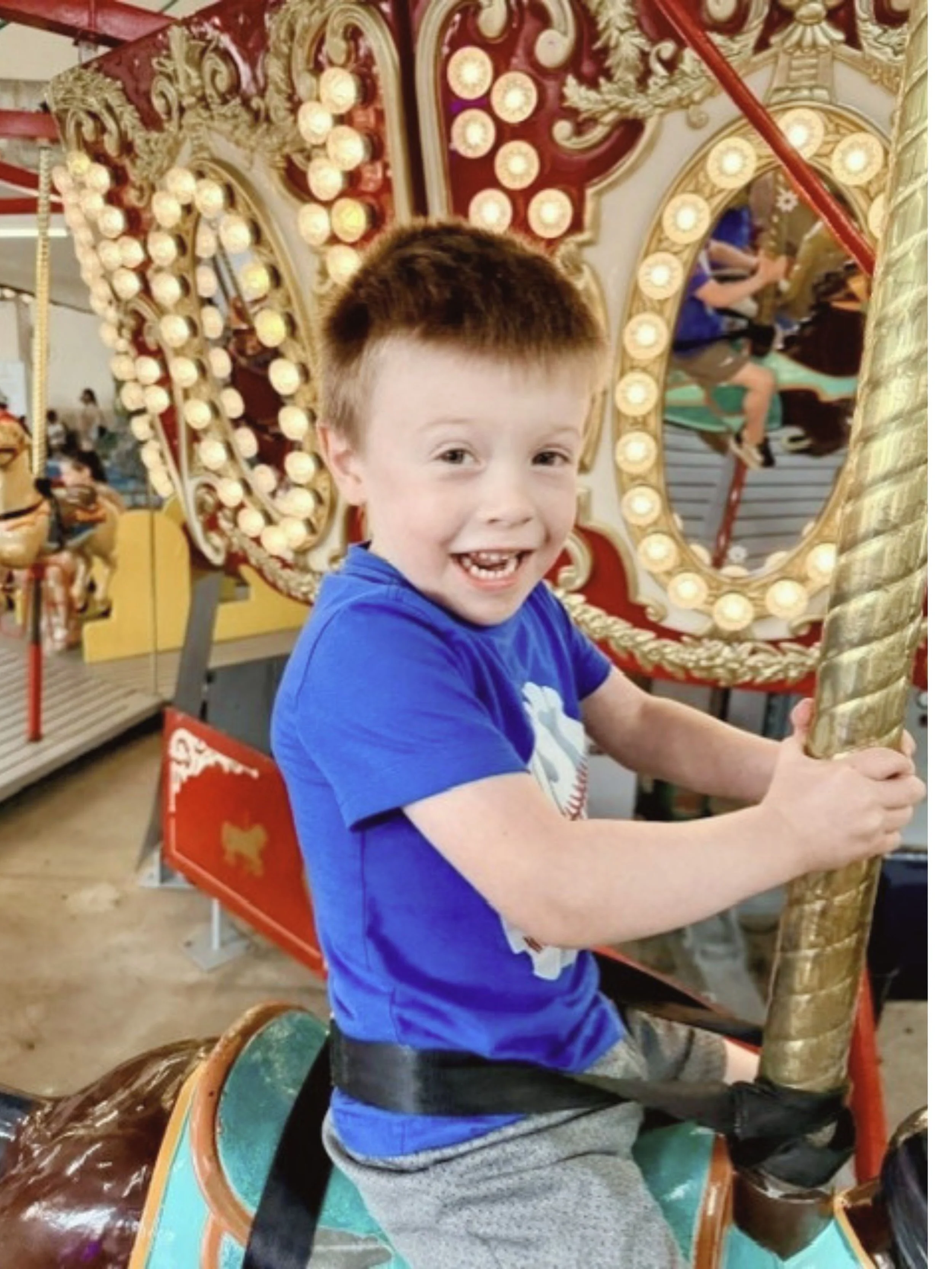
3q29 research has the strong potential to benefit people with other conditions and the general population.
Community
A robust 3q29 community existed before the 3q29 Foundation. In fact, it's the only reason we exist in the first place.
Remember the mom who received a diagnosis for her child and had no one to talk to and knew no one who could relate? Everything changed for her and her child the day she stumbled upon a large private Facebook group, years into their solo experience.
These private groups and events, including our Facebook group and quarterly webinars, are an essential place for those closest to the issue to ask questions and seek connection without judgment.
But the 3q29 Foundation is committed to expanding the sense of community. Most people still don't know what "3q29" means, but we work to create ways for anyone to learn about it, fostering understanding, collaboration, and support.
That same spirit showed up at our Gather Under the Stars event. While this fundraiser centered around an online auction accessible to people around the world, it culminated in a small in-person event where the sense of community was unmistakable. It's safe to say that most people there did not have a 3q29 syndrome diagnosis or even a family member who did. Still, they wholeheartedly supported the foundation and its mission because they've come to understand its relevance.
Where This Leaves Us
Fifteen years ago, a diagnosis raised more questions than it answered. Today, it can mean finding information you need on a Saturday night, a registry to join, a researcher who's listening, and a community that already understands. That shift didn't happen on its own—it happened because people showed up for it, the same way you just did. Whether you made a contribution, participated in the auction, attended the in-person event, or even shared information with your network, you’re making a difference.
Follow us on Facebook, Instagram, or sign up for our quarterly newsletter.